UPDATE – September 18, 2025
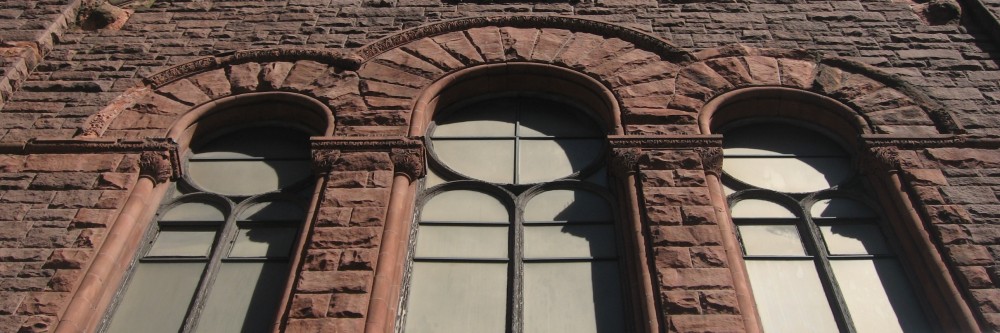
Over the years, our spiritual home at 165 West 86th Street where we have worshiped since 1890 has required more and more financial resources to maintain its fragile sandstone facade, roof and structural elements, exceeding the resources of our shrinking congregation. We have exhausted all our available funds to maintain the building, which has driven us further and further into debt.
The building was designated an individual landmark in 2010 over the unanimous objections of the congregation, restricting future development opportunities and exacerbating the challenges of maintaining the building.
In 2020, the congregation voted to sell the building to avoid being driven into bankruptcy. Our decision to pursue the sale of our spiritual home for over 150 years, where our members made history as advocates for social justice and global peace, was not made lightly. After more than two decades of trying to keep up with repairs and waiting for unfulfilled promises of fundraising to come through, we are committed to exploring every option for our congregation’s future.
In 2022, we submitted an application to the Landmarks Preservation Commission (LPC) for a Notice to Proceed to allow for the demolition of our building on the basis of financial hardship. If approved, the burden of maintaining our cherished but crumbling building would have been lifted from our shoulders. We would have gained a new, 10,000 square foot, state-of-the-art space for worship and community and art programs, and the Presbytery of NYC would have received a $25-$30 million restricted gift – the West Park Presbyterian Church Social Justice Fund – to support community outreach programs in some of the City’s most underserved communities.
On January 5, 2023 we withdrew our application pending a resolution of unrelated litigation concerning the building’s tenant. That litigation is now resolved, which will allow us to move forward in our efforts to invest in the modern, accessible worship and community space that the Upper West Side deserves, and to support our mission in our community and in neighborhoods across New York City. On September 18, 2025 we resubmitted hardship application to LPC.
We want to thank those who have spoken up in 2023 in support of our congregation’s efforts to restore our church and renew our mission in service to our community. We hope that we can count on your continued support as we restart this process anew.
For press inquiries about the Future of West-Park, please email Leslie LeCount at llecount@optimistconsulting.com
Frequently Asked Questions
- What is the history of the West Park Presbyterian Church?
The West Park Presbyterian Church was founded on the Upper West Side in 1852, and has worshiped in its current location at 165 West 86th Street since the 1880s. The congregation has a long history of championing social justice issues. It supported immigrants at the height of anti-Chinese exclusion in the 1880s and was at the forefront of civil rights, anti-war, and anti-nuclear arms movements in the 1960s. It has been active in providing space to community organizations that provide food and housing to disadvantaged and sick New Yorkers. It was one of the earliest Presbyterian churches to support same- sex marriage equality.
- Who owns the building?
The Church congregation built and has owned the building throughout its long history and is solely responsible for its upkeep. Ecclesiastically, the Church is one of 88 congregations under the Presbytery of New York City, and is ultimately part of the Presbyterian Church (USA). Each church in the denomination is an autonomous body responsible for its own property and financial resources.
- What is its structural condition?
The building does not meet current building, fire and ADA code requirements because it has been owned by the same entity since before these code requirements were enacted. Because the building façade is constructed of soft sandstone, decades of exposure to New York’s seasonal weather have caused the façade to deteriorate significantly, and this deterioration will only continue, further jeopardizing public safety. A sidewalk shed has been up for 25 years to protect pedestrians from falling debris.
Over the past three years, multiple independent experts have inspected the property, each confirming that the structure is severely compromised and in poor condition. During one such inspection, it was discovered that the south wall of the sanctuary had detached from the roof, creating a large opening, and that the wall was leaning away from the building and over the 86th Street sidewalk. Here are some images of the current condition of the building:
4. Why has the church decided to sell the building?
In recent years, maintaining the building consumed nearly all of the congregation’s finances, and its preoccupations with building maintenance issues over mission led to a significant decline in its membership. Further, in 2010, over the unanimous objections of the congregation and its pastor, the church building was designated a landmark by the Landmarks Preservation Commission. At the time the building was not occupied and a portion was scheduled for demolition. Proponents of landmarking had pledged millions of dollars to restore the building, but no significant funds ever materialized.
The congregation has now expended all of its financial resources on building maintenance costs, and has been unable to afford a Pastor for the past eight years. In 2017, it created a 501 c-3 to manage the property and raise funds for restoration, but virtually no money was ever raised. The congregation voted in 2020 to sell the building to avoid being driven into bankruptcy. As of June 30, the church had less than
$500 in cash and hundreds of thousands in debt.
5. Who will purchase the building from the church?
In 2022, the Church reached an agreement with Alchemy Properties to purchase the building, which was approved by the Church congregation and the Presbytery of NYC. The sale is conditioned upon obtaining the necessary approvals to demolish the church building and build a new residential tower on the site.
Importantly, the new building will include a 10,000 square foot space that will be retained by the Church for worship and the support of community and arts programs.
6. Why will the church bedemolished?
Over the course of negotiations with Alchemy, months were spent researching different development strategies, including the preservation and repurposing of the existing building, retaining a portion of the building and incorporating it into a new structure. However, the building’s physical condition has deteriorated so severely that none of these alternatives were viable. For example, it would cost an estimated $40 million to restore the building and bring it up to code fully.
The plan to demolish the existing structure represents the only viable path forward: one that protects the surrounding community, reactivates the site with safe and vibrant use, and preserves the Church’s historic mission of serving the community.
7. What will be built on the site?
Once the existing structure is demolished, a new mixed-use building—featuring residential, retail, and a modern worship space—will rise on the site. The Church will occupy a newly constructed 10,000-square-foot space within the building, designed not only for worship but also as a hub for community service. In addition to serving the congregation, the Church will provide the neighborhood with vital space for the arts and social services.
8. How will the sale benefit the church and the community?
In addition to a new 10,000 square foot space and over $8 million to build out this space for worship, community, and arts programs, the Church will receive a cash payment of approximately $33 million. While a portion of these proceeds will be used to repay existing debts and establish an endowment for the Church, an estimated $25 to 30 million will be used to establish the West Park Presbyterian Church Social Justice Fund, an endowment to be managed by the Presbytery of New York City to support the mission of its 88 congregations. The Fund will provide between $750,000 and $900,000 annually and will be restricted solely to support vital programs across New York City, such as:
- Food Assistance – Meals, pantries, soup kitchens, and nutrition programs.
- ImmigrantServices– Meals, clothing, housing assistance, language classes, and integration support.
- Educational Enrichment – Pre-school programs, after-school, tutoring, and youth development.
- Homeless Shelters – Programs throughout the city in support of homeless advocacy groups
- Housing Support – Emergency shelter, rental assistance, and advocacy.
- Arts & Culture – Accessible cultural programming to inspire and unite communities.
- Health Access – Screenings, clinics, and wellness initiatives.
- Adult Literacy – GED preparation, English language learning, and job readiness.
- HistoricPreservation– Capital and maintenance to protect landmarked Presbyterian churches.
Below is a map of the Presbytery churches who will be able to access the funds from the West-Park Presbyterian Church Fund. Specific churches can be found at: https://www.nycpresbytery.org/congregations

9. What approvals does the Church need? What is a hard ship application?
A hardship application is a process under the Landmarks Law that allows a not-for-profit owner of a landmarked building to proceed with demolition if the maintenance of the landmark prevents the organization from carrying out its charitable mission and the application satisfies the criteria set forth in the law. The Church submitted a hardship application in 2022, but the application was withdrawn by the Church in January 2024 because of the ongoing litigation with the Center regarding the lease.
The Church has now resubmitted a new hardship application, now that this litigation has been concluded. It has already participated in multiple hearings and meetings in its prior application and submitted thousands of pages of professional reports substantiating its case. While the Church is confident that its application satisfies the statutory requirements of the landmark law, the ultimate decision rests with the Landmarks Preservation Commission.
10. What is the Center at West Park?
The Center at West Park is a 501 (c) (3) non-profit that was created by the Church in 2017 to manage the Church’s building and raise funds for restoration from sources that might be precluded from contributing to a religious institution. The Church and the Center entered into a five-year lease of the building in 2018, and several of the Church’s tenants became subtenants of the Center. However, it spent almost no funds on the restoration of the building, and over the seven years from 2017 to 2023 (the last year in which its financial statements are publicly available), it had raised just $121,000.
11. Why did the Center at West Park leave the building?
The financial terms of the Center’s lease were so unfavorable to the Church that the agreement was driving the Church further and further into debt. The rent paid by the Center ($2,200 to $2,600 per month over the course of eight years) did not even cover the cost of the Church’s property insurance. The Center’s lease expired on December 31, 2022, but it remained in effect pending a legal challenge to the lease. When it lost its legal challenge, the Center had to leave the building. The Church remains committed, however, to supporting arts and arts education, and wishes them well in their new facility at St. Paul and St. Andrews.
12. How can I support the project?
The most effective way to support this project is by contacting the LPC and local elected officials to express your support, emphasizing the critical financial need. Their contact information is provided below:
Landmarks Preservation Commission
New York City Landmarks Preservation Commission 253 Broadway
11th Floor
New York, NY 10007 Email: info@lpc.nyc.gov Phone: 212-669-7817
Council Member Gale Brewer
563 Columbus Ave New York, NY 10024 Phone: 212-873-0282
Email: district6@council.nyc.gov
Manhattan Borough President Mark Levine
The David N. Dinkins Municipal Building 1 Centre Street, 19th floor
New York, NY 10007
Email: info@manhattanbp.nyc.gov Phone: 212-531-1609
State Senator Brad Hoylman 322 Eighth Avenue, Suite 1700 New York, NY 10001
Phone: (212) 633-8052
Email: hoylman@nysenate.gov
State Assemblymember Micah Lasher
245 West 104th Street New York, NY 10025 Phone: 212-866-3970
Email: lasherm@nyassembly.gov
Congressmember JerroldNadler
201 Varick Street, Suite 669 New York, NY 10014 Phone: 212-367-7350
Read about the Church and its plan
in the Commercial Observer.